
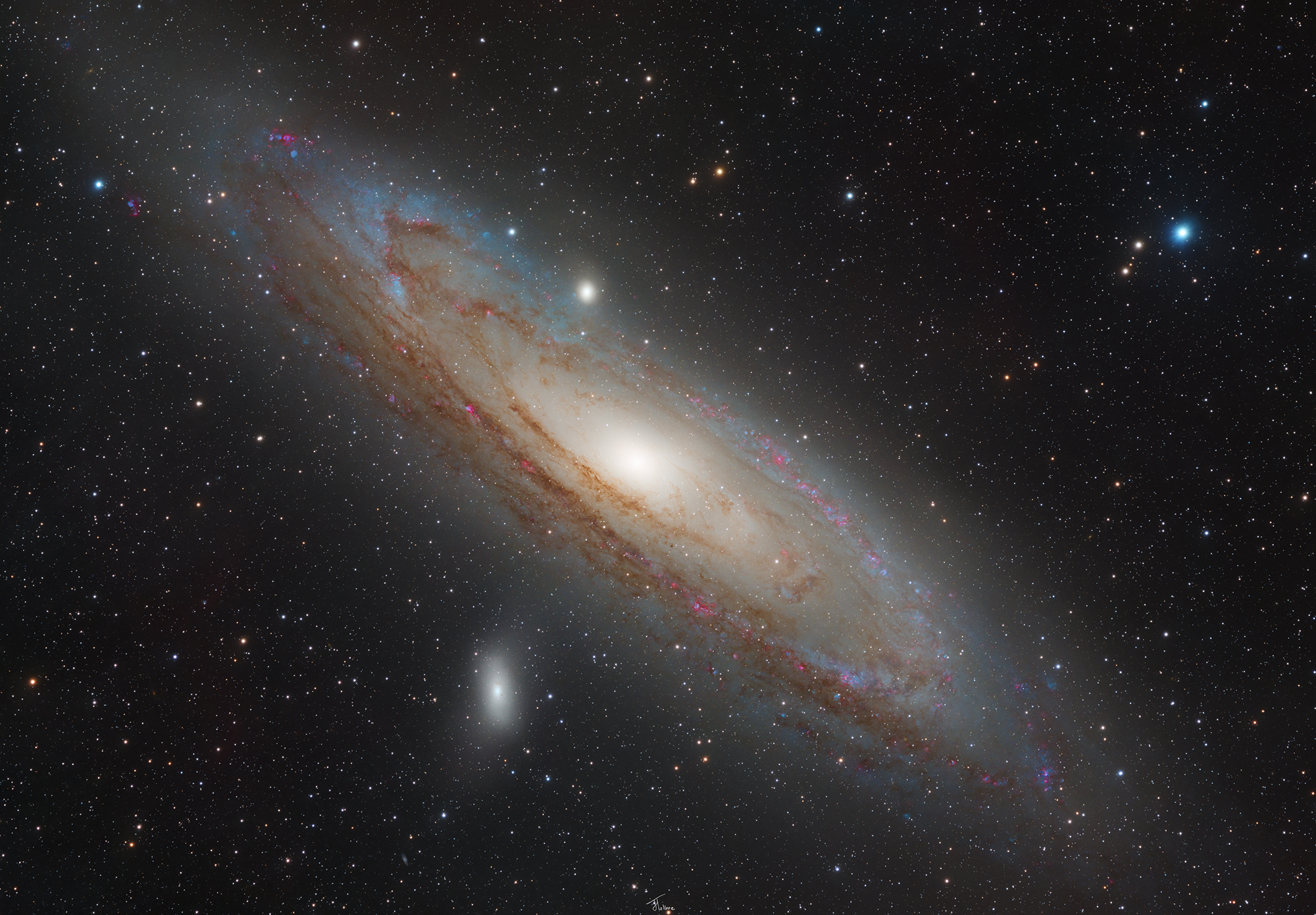
The Andromeda Galaxy

Messier 31, the Andromeda Galaxy, is about 2.5 million light years from Earth, making it one of the most distant objects possible to observe with the naked eye. With a diameter of 152,000 light years and an 1 trillion solar masses, it is similar in mass to our own Milkyway galaxy. Within the next 10 billion years, it has a high chance of colliding with our galaxy, which would result in a giant elliptical galaxy or lenticular galaxy. The small white oval shape in the lower left area of the frame is Messier 110, a dwarf elliptical galaxy that is a satellite of M31.

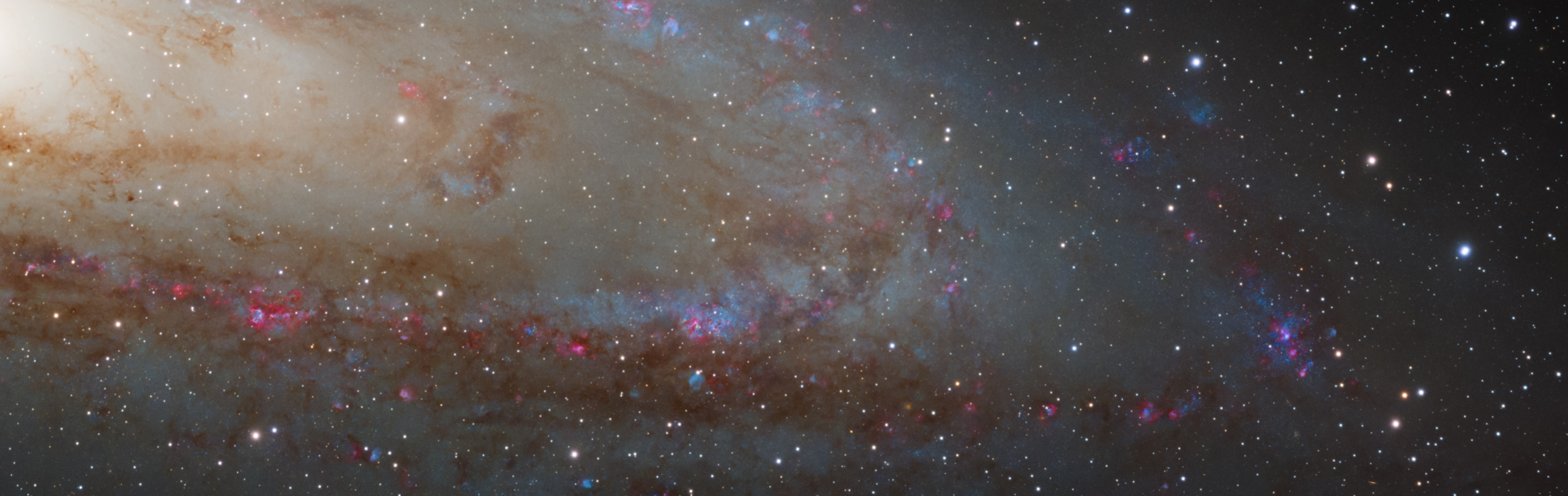
Nebulae

Nebulae

In the spiral arms of the Andromeda galaxy, we can observe areas rich in hydrogen alpha and oxygen emissions, which are shown here as pink-red and blue regions. If we were close enough to see more detail, we would likely find that these areas are much like the nebulae in our own galaxy. They consist of large structures of ionized gases that span many light-years in size.

Acquisition
September 20 - October 19, 2022
Filter Exposures Integration Time
Luminance 310 10.3 hours
Red 80 4 hours
Green 70 3.5 hours
Blue 74 3.7 hours
Ha 84 7 hours
OIII 71 11 hours
Total 40.5 hours
Telescope Skywatcher Esprit 80
Camera RisingCam ATR3-26000KMA